

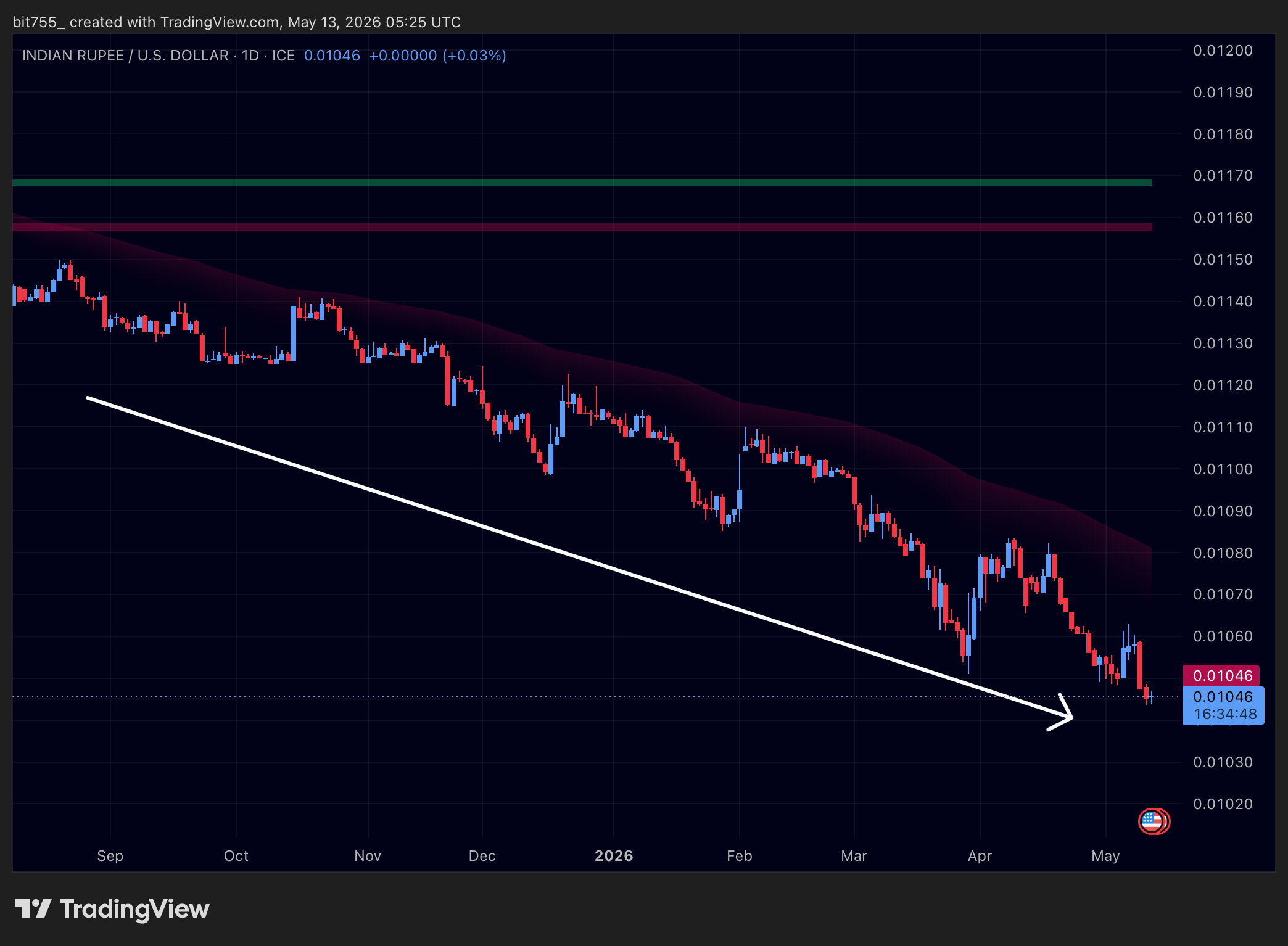
The Indian rupee has been dipping for months now.
PM Modi took the initiative in urging Indians to preserve resources amid global tensions. He asks his people to reduce fuel consumption by carpooling in electric vehicles, to stop buying gold to gift at weddings, and to stop vacationing abroad. He stated that if the Hormuz blockade continues, India only has 60 days of crude oil reserves left, along with 60 days of natural gas and 45 days of LPG supply.
But WHY did the rupee tank so hard? Actually, several reasons collided: first, the heavy foreign portfolio outflows (FPI/FII selling). Foreign investors pulled out tens of billions of dollars from Indian stocks, driven by mistrust and India tiptoeing around foreign engagement. This caused a reduced demand for rupees and an increased selling pressure, favoring the dollar. Next, the US tariffs. Major capital fled the country due to trade uncertainty, and massively impacted export sentiment. The Iran war didn’t help either, with India importing about 85% of its oil. The higher prices widened the trade deficit and increased the demand for dollars (in imports). Last but not least, the global shift toward USD strength, including Indian companies and Indian citizens themselves buying dollars (due to US policy, interest rates, and risk-off sentiment) added to the dollar’s supply shock. India is in a pickle and it has itself seasoned the brine. Had it not been for the RBI’s reserves, the impact would have been even harder.
Modi has 1.4B people to control, 160M of which are living in poverty even by Indian standards. By international standards, about 340M Indians are living in poverty. People who have nothing to lose are hard to control, and they react poorly to being told to consume less.
The rupee’s trajectory is an interesting case to follow.